Running an Off-Grid Farm on Solar, Batteries and Generators: A PCAS Case Study
1 Nov 2026
A farm in Shropshire runs with no grid connection at all. Every light, fan and conveyor depends on power generated on site. The owner wanted the solar and battery storage to do the work, with the diesel generators only there as backup. PCAS designed the control system that makes that happen.
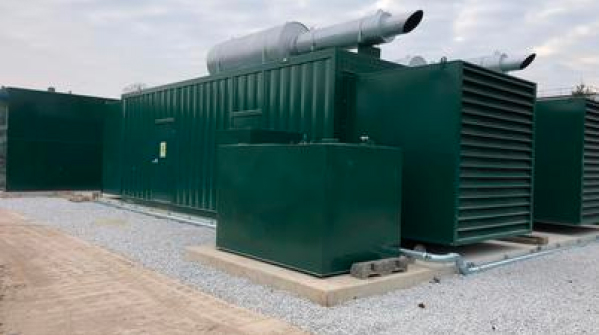
The site had three sources of power: a battery energy storage system (BESS), a solar PV array, and diesel generators. Each worked on its own, but nothing made them work together. That caused three problems:
We put the whole site under one ComAp InteliNeo 5500 controller, so every decision comes from one place.
Solar curtailment by battery charge. The controller only holds the solar back when the battery is nearly full. While the battery has room, every kilowatt of solar goes into it. When it fills up, the controller trims the inverters so solar output matches the load and nothing back-feeds the generators.
Automatic battery calibration. On Monday, Wednesday and Friday at 18:00, the controller checks whether the battery has reached 100% since the last check. If it hasn’t, it forces a full charge, using the generators if needed, then stops. A time limit is built in as a backstop. A manual button forces a calibration charge whenever the farm wants one.
Generators only when needed. The generators now start for three reasons only: the calibration charge, their routine exercise run, or a genuine shortfall. When the batteries and solar can cover the farm, the generators stay off.
Bringing the battery data in. We connected the battery management system to the controller over CAN, using a J1939 interface module. That puts state of charge, alarms and cell data in the same place as everything else.
SCADA the farm can read. We loaded a PCAS designed InteliSCADA screen set, so the owner can see solar, battery and generators at a glance, on site or remotely.
The farm now runs on solar and batteries for most of the day. The generators run far fewer hours, which means less diesel, less servicing and less noise. The battery reading stays accurate, so the system makes the right call when it decides whether a generator needs to start.
If you run generators for long hours, have a weak grid supply, or have solar that keeps tripping or getting curtailed, a hybrid control system can usually help. PCAS designs, builds, commissions and maintains hybrid microgrids across the UK, all on ComAp controls.
Read about our hybrid microgrid services
PCAS provides 24/7 generator service agreements across Yorkshire, the North West and the UK. Call 0114 317 7939 or email support@pcasltd.com.
Have a question about this article? Email support@pcasltd.com or call 0114 317 7939.