Generator Sound Attenuation: Keeping Your Standby Set Within Noise Limits
6 Nov 2026
A generator that’s too loud can stop a project in planning, bring complaints from neighbours, or breach the conditions on your site. Noise is easiest and cheapest to deal with at the design stage. Here’s how it’s done.
The first job is always to find out which limit applies, where it’s measured, and at what times.
Each one needs its own fix. Treating only one rarely gets you under the limit.
Acoustic canopies. Factory enclosures come in standard and super-silent versions. They’re the simplest option for outdoor sets, but check the rating is quoted at the distance that matters to your site.
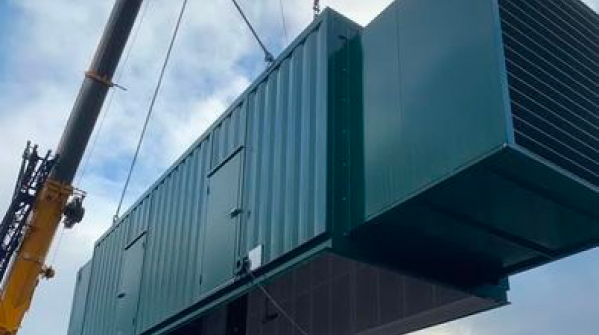
Containerised sets. For larger sets, an acoustic container with attenuated air inlets and outlets gives much better results and protects the set from the weather.
Plant rooms. Inside a building, the room itself does much of the work, but only if the air inlet and discharge are fitted with splitter attenuators and the walls and doors are rated for it. PCAS recently installed two 1,250 kVA sets inside a plant room in Blackpool, where getting airflow and attenuation right together was the main design challenge.
Exhaust silencers. Residential or critical grade silencers, sometimes two in series, with the exhaust routed away from sensitive neighbours.
Anti-vibration mounts and flexible connections, so vibration doesn’t travel into the structure.
Most generators make the majority of their noise during routine tests, not emergencies. Simple steps, like scheduling tests during the day and avoiding running at full load next to homes, can solve a complaint without any new hardware. A load bank positioned sensibly helps too.
We advise on noise at the design stage, specify enclosures, attenuators and silencers, install and commission the set, and can measure noise on site before and after. On existing sites, we can review your test regime and controller settings to cut test noise straight away.
See our generator installation services
PCAS provides 24/7 generator service agreements across Yorkshire, the North West and the UK. Call 0114 317 7939 or email support@pcasltd.com.
Have a question about this article? Email support@pcasltd.com or call 0114 317 7939.